Build a starter game.
Go from a Codex prompt and template to a runnable product-discovery game. Share the starter files and decisions.
I’m Adnen Ben Abdelaali, the builder behind AI Games Studio. I’m exploring how Codex-assisted development can help creators turn their ideas into lightweight games—and help people discover the local producers behind them.
Tunisian olive oil, dates, traditional products, and the people who make them deserve thoughtful ways to be discovered. My starting idea was simple: use free, interactive experiences at expos to bring visitors closer to those stories.
AI Games Studio is an early prototype of that idea. It combines a visual authoring tool, editable behavior, Blender sprite preparation, and Cocos Creator examples. I want to document the parts that work, be clear about the parts that don’t yet, and make the process useful to another builder.
Source code, a playable sample, an illustrated guide, and a real prompt-to-result lesson.
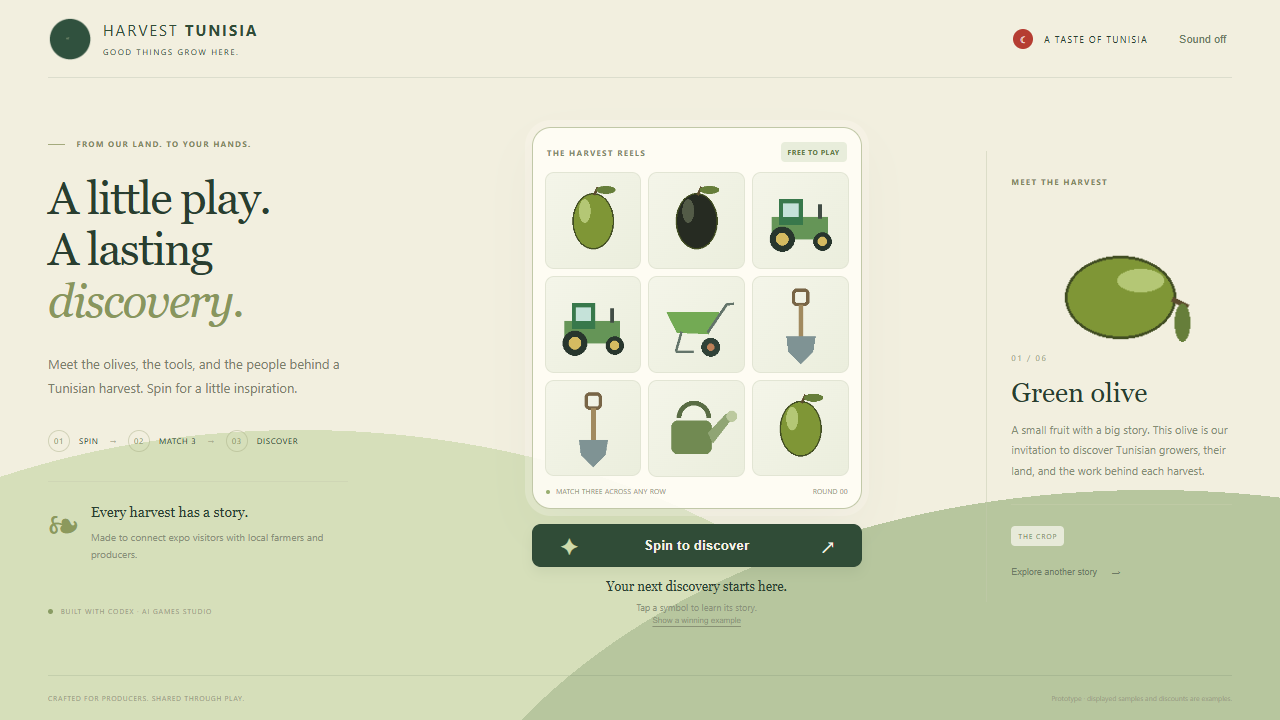
A practical experiment in editable game-making and product discovery. The public sample uses original, redistributable illustrations. The repository explains the 3D workflow and includes a genuine Blender-baked bottle animation.
Try the sample ↗For my Codex Content Ambassador application, I propose one useful French/Arabic tutorial per month for six months. These are planned contributions—not claims of completed releases or program acceptance.
Go from a Codex prompt and template to a runnable product-discovery game. Share the starter files and decisions.
Use Blender MCP to render a product’s glow and rotation into a transparent sprite atlas.
Demonstrate supported UML/code round-tripping, revision checks, and the boundary with custom runtime code.
Edit scene objects and TypeScript, then build an HTML5 version people can try in a browser.
Measure loading and responsiveness, share the results honestly, and explore sprite/texture optimizations.
Package a Tunisian product showcase, document lessons, and use community questions to improve the next version.
Each planned release would include reproducible code, relevant prompts, limitations, and community Q&A. The aim is useful teaching—not simply a polished final screenshot.